A fall doesn’t always happen because of one major hazard. Sometimes it is a combination of small things – poor lighting, a slippery surface, a difficult step or simply a change in someone’s mobility- that makes an everyday activity harder than it used to be. There are likely to be fall hazards in and around the home without being noticed until it’s too late.
For older Australians, this can become particularly important. Falls are Australia’s leading cause of injury hospitalisation, with more than 253,800 fall-related hospitalisations recorded in 2024–25. The good news is that many potential hazards around the home can be identified and addressed.
Here are 10 common fall hazards in the home worth checking.
1. Loose rugs and mats
Rugs can make a room feel warmer and more comfortable, but they can also create a trip hazard. Loose edges, curled corners and rugs that move underfoot can make it easier to lose balance.
→What to check
Look for rugs that:
- Move when walked on
- Have curled or raised edges
- Sit across frequently used walkways
- Have become worn or damaged
Consider removing unnecessary rugs or securing suitable rugs so they cannot move.

2. Poor lighting
Rugs can make a room feel warmer and more comfortable, but they can also create a trip hazard. LoBeing able to see clearly is an important part of moving safely around the home.
Dark hallways, stairways and bathrooms can make changes in floor level or obstacles harder to see.
Night-time trips to the bathroom can be particularly challenging.
→What to check
Walk through the home at different times of day and consider:
- Are hallways adequately lit?
- Are stairs clearly visible?
- Is there enough lighting around the bathroom?
- Can lights be easily switched on when getting out of bed?
- Are outdoor paths and entrances adequately illuminated?
Additional lighting or strategically positioned night lights may make some areas easier to navigate.
3. Clutter and narrow walkways
Everyday objects can gradually find their way onto floors and walkways.
Shoes, bags, boxes, electrical cords and furniture can reduce the amount of clear space available for walking.
This can become particularly important for someone using a walking frame or other mobility aid.
→What to check
Look at the routes used most frequently through the home. Are there clear, unobstructed paths between:
- The bedroom and bathroom?
- The bedroom and living areas?
- The living area and kitchen?
- The front door and driveway?
- Other regularly used rooms?
The aim is to create enough clear space for the person to move comfortably and safely.
4. Bathroom slips and transfers
Bathrooms are one of the areas where mobility, balance and the environment can interact significantly.
Wet surfaces, difficult shower access and low toilets can make everyday activities more challenging.
Getting into or out of the shower can also be particularly difficult for someone whose balance or strength has changed.
→What to check
Consider whether you can safely:
- Enter and exit the shower
- Stand while showering
- Sit down and stand up from the toilet
- Move between the bathroom fixtures
- Access towels and other essentials without reaching or twisting unnecessarily
Depending on the person’s needs, an OT may recommend equipment or modifications such as grab rails, shower seating, accessible showering or other changes.
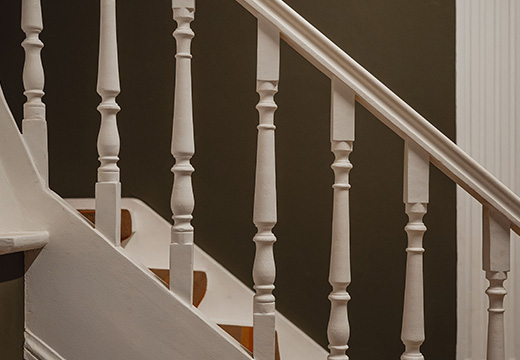
5. Stairs and steps
A step that once seemed insignificant can become a substantial obstacle when someone’s balance, strength or vision changes.
Stairs can also become more difficult when carrying objects or moving between different floor levels.
→What to check
Look for:
- Poorly lit stairs
- Missing or inadequate handrails
- Uneven or damaged steps
- Slippery surfaces
- Changes in floor level that aren’t clearly visible
- Objects being left on stairs
Handrails, improved lighting and other modifications may help make stairs easier to manage. For someone struggling with stairs, an OT assessment can help determine what solution may be appropriate.
6. Difficult entry and exit areas
The front entrance is an important part of an accessible home. A step, narrow doorway, uneven path or difficult threshold can make getting in and out of the home harder.
This can be especially relevant for people using walking aids, wheelchairs or other mobility equipment.
→What to check
Look at the entire journey:
Street → pathway → entrance → threshold → doorway → inside the home
- Is there a clear and manageable route?
- Are there steps or uneven surfaces?
- Is the doorway wide enough?
- Is there somewhere stable to hold when negotiating the entrance?
Potential solutions may include handrails, ramps, threshold modifications or other accessibility improvements.
7. Furniture that impedes movement around the home
Furniture doesn’t necessarily need to be removed simply because someone is having mobility difficulties.
However, the arrangement of furniture can sometimes make moving through a room unnecessarily difficult.
Chairs, coffee tables and other furniture can create narrow pathways or require awkward turns.
→What to check
Try walking through the room using the person’s usual mobility aid. Is there enough space to:
- Turn around?
- Move between furniture?
- Approach a chair?
- Stand up safely?
- Move towards the doorway?
Sometimes rearranging furniture can make a surprisingly significant difference.
8. Difficulty getting in and out of bed or chairs
Falls don’t only happen while walking. Getting up from a chair, sitting down, transferring to a bed or standing from the toilet can also present challenges.
Changes in leg strength, balance or mobility can make these everyday movements more difficult.
→What to check
Ask: “Is getting up or sitting down becoming harder than it used to be?”
Look for signs such as pushing heavily on furniture, needing assistance, losing balance when standing or avoiding particular chairs.
An OT can assess transfers and consider whether changes to equipment, furniture height, positioning or other modifications may help.
9. Electrical cords and everyday trip hazards
Electrical cords can easily end up crossing walkways. Phone chargers, lamps, appliances and extension leads can create obstacles that may be difficult to see.
→What to check
Look at the floor around:
- Beds
- Living room furniture
- Desks
- Kitchens
- Hallways
- Frequently used appliances
Where practical, reposition equipment or cords so they don’t cross commonly used walking paths.
10. A change in the person, not just the home
This may be the most important consideration of all. Sometimes the home hasn’t changed.
→What to check
Have the person’s needs have changed? A person may have become less steady, weaker, more fatigued or less confident.
- They may have started using a walking frame
- They may be taking longer to get around the house
- They may have stopped using the stairs
- They may have started avoiding the shower because it feels unsafe
These changes can be easy to overlook because they happen gradually. But they can be an important signal that the home should be reassessed.
A home that was safe five years ago may not be safe today
One of the biggest misconceptions about home safety is that a home is either “safe” or “unsafe.” In reality, safety can change as a person’s circumstances change.
A home may have worked perfectly well when someone was more mobile, stronger or more confident on their feet. As those things change, the environment may need to change too.
That’s where an occupational therapist can provide valuable insight.
What does an OT Home Assessment look at?
An occupational therapist can look at the relationship between the person and their home environment. Rather than simply identifying hazards, an OT can consider:
- What the person wants to do
- What they are currently finding difficult
- How they move around their home
- Their functional abilities
- Their mobility and transfers
- The layout and features of the home
- Equipment they currently use
- Potential equipment or modifications
- Practical ways to improve independence
The recommendations are therefore based on the individual, rather than simply applying the same checklist to every home.
Small changes can make a big difference
Improving home safety doesn’t necessarily mean undertaking a major renovation. Sometimes the answer may be as simple as:
- Removing a trip hazard
- Improving lighting
- Rearranging furniture
- Installing an appropriate grab rail
- Improving access to a shower
- Making an entrance easier to navigate
- Introducing appropriate assistive equipment
Other situations may require more substantial home modifications. The important thing is understanding what is actually needed before deciding what should be changed.
Don’t wait until after a fall
A fall can be the event that finally prompts someone to look at their home. But it doesn’t have to be.
If someone is becoming less confident, struggling with everyday activities or finding parts of their home increasingly difficult to use, it may be worth seeking advice before a serious incident occurs.
An OT home assessment can help identify barriers and provide recommendations based on the person’s individual needs and goals.
Is it time to look at your home differently?
Take a walk through the home and ask: What has become harder to do? Not just: “What looks dangerous?” That distinction matters. The goal of a safer home isn’t to restrict someone. It is to help them continue doing the things that matter to them.
At Home Access Group, we help coordinate OT home assessments for older Australians, families and Support at Home providers. We start with the person, understand what is becoming difficult and help identify practical options for making the home work better.
Your home should work for you – not the other way around.
A safer home starts with understanding the person
Every home is different. Every person is different. That is why the right approach starts with the individual rather than a list of products. At Home Access Group, we help coordinate OT home assessments that consider the person’s needs, goals, functional abilities and home environment.
The mission is simple: Help people stay safe, independent and at home for longer. If you or someone you care for is finding everyday activities around the home more difficult, an OT home assessment may be a useful place to start.
Your home should work for you – not the other way around. Reach out and we’ll get back to you as soon as possible.
Still looking to learn more about OT home assessments and home modifications? Try our quick links below:
Information about Support at Home and the Assistive Technology and Home Modifications scheme can change. Providers should refer to current Australian Government guidance when making funding and service decisions.