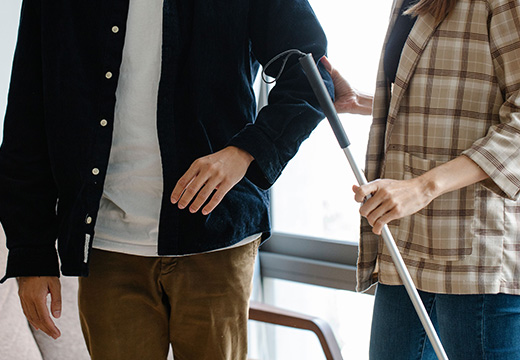
Returning home after a stroke can bring new challenges. Changes in mobility, balance, coordination, strength or the ability to perform everyday tasks may make familiar parts of the home more difficult to use. For some people, getting into the shower, moving between rooms or navigating stairs may require a different approach.
Home modifications after a stroke can help address these barriers and support greater independence.
What challenges might arise at home?
Depending on the effects of the stroke, someone may experience difficulty with:
- Walking safely around the home
- Getting in and out of the shower
- Using stairs or steps
- Getting into and out of bed
- Using the toilet independently
- Accessing the front entrance
- Moving around with a walking aid or wheelchair
Every person’s recovery is different, so modifications should reflect their current abilities, rehabilitation goals and potential changes in function.
What home modifications might help?
Possible recommendations include grab rails, ramps, improved access to the bathroom, changes to doorway clearance, suitable transfer equipment or adjustments to the layout of frequently used rooms.
Some people may need only minor changes, while others may require more extensive modifications. It is important to assess the person’s needs before deciding which solution is appropriate.
Why arrange an OT Home Assessment?
An occupational therapist can assess how the person manages everyday activities and identify barriers within the home. The assessment can help determine what equipment or modifications may support daily activities, taking into account mobility, transfers, accessibility and rehabilitation goals.
For people considering NDIS-funded home modifications, the relevant assessment and funding requirements must be met. Learn more about NDIS home modification assessments.
Planning for a safer return home
Ideally, home accessibility should be considered as part of discharge and rehabilitation planning where difficulties are anticipated. The right changes may help someone regain confidence, manage daily activities and make better use of their home. Home Access Group helps coordinate OT home assessment services to identify practical options based on individual needs.
If a stroke has changed how you or someone you care for manages at home, contact Home Access Group to discuss an OT Home Assessment.
A safer home starts with understanding the person
Every home is different. Every person is different. That is why the right approach starts with the individual rather than a list of products. At Home Access Group, we help coordinate OT home assessments that consider the person’s needs, goals, functional abilities and home environment.
The mission is simple: Help people stay safe, independent and at home for longer. If you or someone you care for is finding everyday activities around the home more difficult, an OT home assessment may be a useful place to start.
Your home should work for you – not the other way around. Reach out and we’ll get back to you as soon as possible.
Information about Support at Home and the Assistive Technology and Home Modifications scheme can change. Providers should refer to current Australian Government guidance when making funding and service decisions.