
WHO WE HELP
Supporting people at every stage of life.
A person’s need for a safer or more accessible home can arise for many different reasons. It may be the natural changes that come with ageing, recovery from an injury, a new disability, a change in mobility or a desire to make a home better suited to changing needs.
At Home Access Group, we assess the person, their goals and their home environment to identify practical solutions that can help them live more safely and independently

WHO WE HELP
Older Australians
Helping people age safely and independently at home. As we get older, everyday activities can become more challenging. Stairs, bathrooms, entrances and other areas of the home may become harder to navigate, increasing the risk of falls and reducing confidence.
Home Access Group can assess the home and recommend practical modifications that support changing mobility, improve safety and help older Australians remain in the home they know and love for longer.
For eligible participants, our services can also support the Assistive Technology and Home Modifications (AT-HM) pathway under Support at Home. The AT-HM scheme provides funding for approved home modifications that help older people live safely and independently at home.
WHO WE HELP
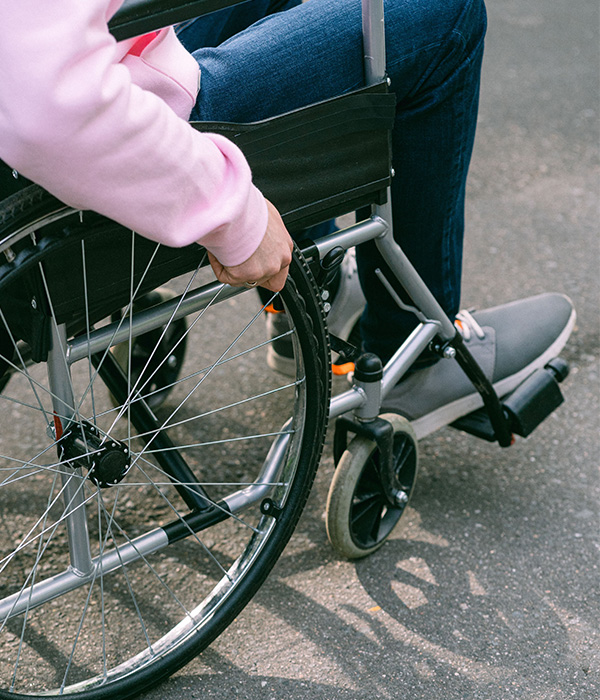
People living with disability
Making homes more accessible, practical and independent. A person’s home should support their abilities, not create unnecessary barriers. For people living with a physical, neurological, sensory or other disability, changes to the home can make everyday activities easier and improve accessibility.
Our assessments consider the person’s individual capabilities, routines and goals, and may identify modifications such as improved access, ramps, rails, bathroom changes, doorway modifications, lighting or other accessibility solutions.
Our approach is person-centred and focused on helping people do more of what matters to them, in their own home.

WHO WE HELP
People recovering from injury
Supporting a safer return home and everyday life. An injury can temporarily or permanently change the way someone moves around their home. Following an accident, fracture, surgery or other injury, everyday activities such as showering, using stairs, getting out of bed or entering the home can become difficult.
An occupational therapy home assessment can identify potential barriers and recommend practical changes that support a safer and more independent recovery.
Where appropriate, modifications can also be considered with the person’s anticipated recovery and longer-term needs in mind.
WHO WE HELP
People returning home from hospital or rehabilitation
Helping make the transition home safer. Returning home after a hospital stay, rehabilitation or major medical event can be a significant step. The home environment may not be set up for a person’s current mobility or functional abilities, even if they previously managed without assistance.
Home Access Group can assess the home environment and identify modifications that may help support a safer transition home – helping people regain confidence and independence in their familiar surroundings.
This can be particularly valuable when someone’s abilities have changed significantly during their hospitalisation or rehabilitation.

WHO WE HELP
People experiencing reduced mobility
Helping people move around their home with greater confidence. Mobility can change for many reasons, including ageing, illness, injury, neurological conditions or changes in strength and balance.
A home that was once easy to navigate can become difficult or unsafe. We assess how a person moves through their home and identify practical opportunities to improve access, reduce hazards and provide additional support where it is needed.
Solutions may include rails, handrails, ramps, access modifications, bathroom solutions, lighting and other home modifications.
WHO WE HELP
People at risk of falls
Helping reduce hazards and improve confidence at home. Falls can have a significant impact on confidence, independence and quality of life.
A home assessment can help identify environmental factors that may contribute to falls or make recovery from a fall more difficult. We look at movement pathways, stairs, bathrooms, lighting, flooring, access points and other areas of the home to identify practical opportunities to improve safety.
The aim isn’t to eliminate every risk. It’s to find sensible ways to manage risk while preserving independence and choice.
WHO WE HELP
People with changing health or functional needs
When the way you live changes, your home may need to change too. A change in health or functional ability can alter the way someone uses their home. Whether the change is gradual or unexpected, an Occupational Therapy Home Assessment can help identify modifications that support new needs and maintain independence.
This may be relevant for people experiencing changes associated with neurological conditions, chronic illness, reduced strength, balance difficulties or other changes in functional capacity.
WHO WE HELP
People planning ahead
You don’t need to wait for a problem to become a crisis. Home modifications aren’t only for people who are already struggling. Some people choose to make changes proactively – preparing their home for future mobility needs and reducing potential barriers before they become a significant problem.
Planning ahead can provide greater confidence and allow modifications to be considered carefully rather than being made urgently following a fall, injury or hospital admission.
Our Support at Home services
One partner from assessment through to installation. Home Access Group can support providers across the home modification process.